Why I built my own landing-page system
Campaign improvements can be held back by a slow, generic page. I wanted a practical way to fix that without handing clients another project to manage.
 Dan Courtis
Working on Google Ads, I kept reaching a point where the next useful change was on the website. A relevant ad could still send someone to a slow page, a generic homepage or a service buried in the navigation.
Fixing that meant working around the existing website, finding someone to make the changes and asking the client to coordinate another project. Even when everyone agreed the page needed attention, it could sit unresolved while the campaign kept paying for clicks.
That was the problem I wanted to take responsibility for.
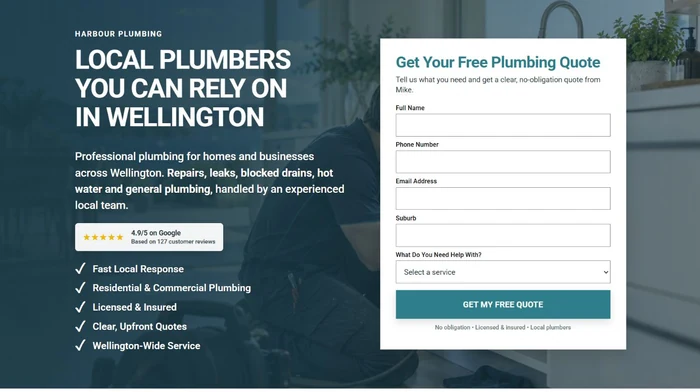
Match the page to the search
Someone searching for help with a blocked drain has a specific problem. They need to establish whether the plumber clears blocked drains, covers their area and offers a suitable way to get help. A broad introduction to the business leaves them to make those connections themselves.
The blocked-drains variation in my plumber demo addresses that search directly. The headline names the problem, the supporting copy identifies the service and location, and the enquiry form already has Blocked Drains selected.
The aim is to carry the reason for the click through to the enquiry. The information still has to reflect the business accurately, particularly claims about availability, qualifications and response times.
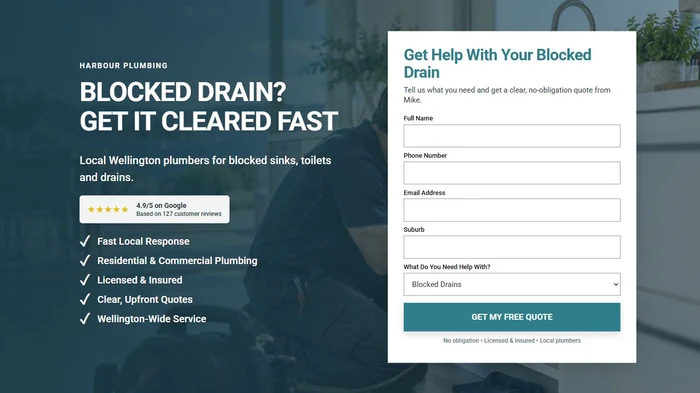
Reuse the structure, tailor the experience
A clear opening, relevant evidence, useful service information and an obvious next step provide a starting structure. Rebuilding those elements for every project adds work without necessarily improving the page.
I wanted a repeatable system with enough flexibility to suit the business. Branding, imagery, service details, customer feedback and the questions a visitor needs answered can all be tailored. Related searches can share an experience; a different service can have its own content where that makes sense.
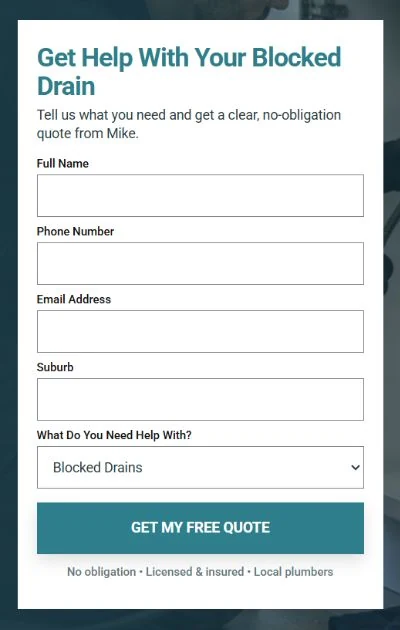
The form is part of that work. In the blocked-drains example, its heading and selected service reflect the page the visitor has just read. On mobile, the layout becomes a single column without losing that context.
Take the coordination off the client
Where suitable information already exists, I can prepare the page using the business’s website, approved imagery and genuine customer feedback. The client reviews the details and confirms that the page represents them correctly. They can contribute more if they want, without having to organise the build themselves.
Their existing website can stay in place. The landing pages are hosted separately under an agreed address on their domain, with access and the current setup checked first. That gives us more control over the campaign destination without making a website rebuild a prerequisite.
Check the work, then measure the result
Page speed, mobile usability and conversion tracking are part of the delivery. I want to know that the page loads properly, the form works and a recorded enquiry represents a successful submission. Counting a button click would not establish that.
Those checks make the page ready to test. They do not establish that the campaign will become profitable. Search quality, the offer and how the business handles enquiries still affect the outcome.
My landing-page service gives us a practical way to improve that part of the campaign and judge it against actual enquiries, with one person responsible for getting the page prepared and checked.